

How to Make Calcium for Your Garden Using Eggshells
Updated: Apr 18
Calcium is one of the most important nutrients in soil. It supports cell wall development, root growth, and overall plant structure. When calcium is lacking, plants can develop issues such as blossom end rot in tomatoes, poor root formation, and weak growth.
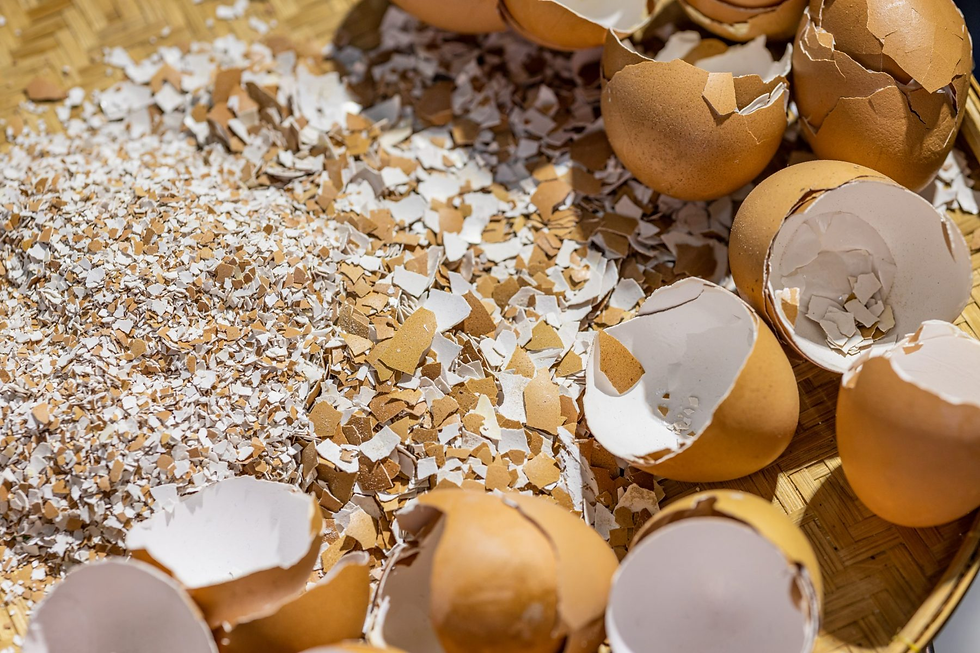
Eggshells are a simple and effective way to return calcium to your soil. They are made primarily of calcium carbonate, the same compound found in agricultural lime. When processed correctly, eggshells can be turned into a usable soil amendment using materials you already have at home.
Why Eggshell Calcium Needs Preparation
Raw eggshells are made primarily of calcium carbonate in a dense crystalline structure, which makes them physically strong and slow to break down. When added to soil in large pieces, they can persist for long periods with very little immediate benefit to plants.
In natural conditions, breakdown depends on:
soil acidity gradually dissolving the calcium carbonate
microbial activity breaking down remaining organic material
physical weathering from moisture and temperature changes
This process is slow, which is why unprocessed shells can take months or even years to meaningfully contribute calcium to the soil.
What Proper Processing Does
Preparing eggshells before adding them to your garden changes how quickly and effectively they can be used.
removes moisture and organic residue
The inner membrane and leftover egg material can hold moisture and support bacterial growth. If not removed or dried, this can lead to odor and attract pests. Washing and baking eliminates these issues and stabilizes the material
increases surface area for faster breakdown
Crushing or grinding the shells exposes more of the calcium carbonate to soil conditions. This allows water, microbes, and natural acids to interact with a larger surface, speeding up the release of calcium
Why Particle Size Matters
The size of the eggshell pieces directly affects how quickly calcium becomes available.
large pieces break down very slowly and act more like long term mineral fragments
coarse crushed shells provide moderate, gradual release
fine powder allows for the fastest interaction with soil and moisture
When eggshells are ground into a fine powder, they behave more like a readily accessible soil amendment rather than a slow decomposing material.
Step by Step: Making Eggshell Calcium
Turning eggshells into a usable calcium source is a simple process, but each step plays an important role in stability, cleanliness, and effectiveness. When done properly, you move from raw waste material to a consistent soil amendment.
Step 1: Collect Eggshells
Start by building a steady supply.
save shells from daily kitchen use rather than trying to collect all at once
lightly crush them as you go to reduce storage space
store in an open container such as a bowl, tray, or breathable bag to prevent trapped moisture
keep them in a dry area to avoid mold or odor buildup
Allowing shells to air dry between uses helps prevent bacterial growth and makes the later cleaning step easier.
Over time, you can build a large enough batch to process efficiently in one go rather than working in small amounts.
Step 2: Wash the Shells
Cleaning removes organic residue that can interfere with storage and soil application.
rinse shells under warm water to remove egg white and yolk residue
gently peel away the inner membrane if it separates easily, though this is optional
inspect shells for any remaining organic material and rinse thoroughly
This step reduces:
odor during storage and processing
risk of attracting pests
introduction of unwanted bacteria into your soil system
Clean shells are more stable, easier to dry, and produce a more consistent final product.
Step 3: Dry and Oven Bake
Drying and baking prepares the shells for efficient breakdown and long term storage.
spread shells in a single layer on a baking tray to ensure even drying
bake at a low temperature, around 200 to 250°F for 20 to 30 minutes
avoid higher temperatures, as the goal is drying, not burning
allow shells to cool completely after baking
This step does several things:
removes any remaining moisture trapped in the shell structure
reduces microbial activity by sterilizing the surface
makes the shells more brittle, which improves how easily they can be crushed
Properly dried shells should feel light and crisp, breaking easily under pressure.
Step 4: Crush Into a Fine Powder
Particle size determines how quickly the calcium becomes available in the soil.
begin by crushing shells into smaller fragments using your hands, a rolling pin, or a mortar and pestle
transfer to a blender, spice grinder, or coffee grinder for finer processing
pulse in short bursts to achieve a consistent texture
The goal is to produce:
a coarse grit for slower release
or a fine powder for faster interaction with soil moisture and microbial activity
A powder that resembles coarse flour or fine sand provides the best balance between ease of application and nutrient availability.
How to Apply Eggshell Calcium
Eggshell calcium works best when it is used consistently and in small amounts, allowing it to integrate into the soil over time. Because it is a slow release form of calcium carbonate, application method influences how quickly and effectively plants can benefit from it.
Direct Soil Application
This is the most immediate way to incorporate eggshell calcium into your growing space.
sprinkle a small amount of fine powder (1-2 tablespoons) into planting holes before transplanting seedlings
mix it into the top few inches of soil where root activity is highest
apply lightly and evenly rather than concentrating large amounts in one spot (1-2 cup per 10 square feet)
This method places calcium close to developing roots, where it can gradually become available as moisture and soil biology begin breaking it down.
It is especially useful for crops that are sensitive to calcium imbalance, such as tomatoes and peppers, when used as a preventative measure rather than a correction.
Compost Integration
Adding eggshells to compost allows them to become part of a more biologically active system.
mix crushed or powdered shells evenly into your compost pile
combine with nitrogen rich and carbon rich materials to maintain balance
turn the pile regularly to distribute minerals and improve decomposition
During composting:
microbial activity helps break down the shell structure
organic acids produced in the pile increase calcium solubility
the final compost distributes calcium more evenly throughout the soil
This approach does not speed up calcium release dramatically, but it improves how well it is integrated and utilized in the soil.
Top Dressing
Top dressing provides a way to maintain calcium levels during the growing season.
sprinkle a light layer of powder around the base of established plants
avoid piling directly against stems to prevent moisture issues
gently work into the soil surface or water in to help it settle
This method supports ongoing nutrient cycling, especially in actively growing beds where nutrients are being continuously used and depleted.
Over time, repeated light applications build a more stable calcium presence in the soil.
Important Considerations
eggshell calcium is not immediately soluble, so it will not correct acute deficiencies quickly
calcium availability depends on soil chemistry, particularly pH, as overly acidic or highly alkaline soils can limit uptake
water consistency plays a major role in calcium transport within plants, so uneven watering can still lead to deficiency symptoms even if calcium is present
excessive application can gradually shift soil balance, particularly toward higher alkalinity, so moderation is important
Eggshell calcium should be viewed as a long term soil amendment, not a quick fix.
Which Plants Benefit Most
Calcium is essential for cell wall strength, root development, and the movement of water and nutrients within plants. Because calcium is not mobile once inside plant tissue, it must be continuously supplied through the soil and taken up with water.
The following plants benefit most from steady calcium availability, especially when conditions support proper uptake:
tomatoes (prevents blossom end rot)
peppers (prevents blossom end rot)
eggplant (blossom end rot susceptibility)
cucumbers
squash (zucchini, pumpkin, etc.)
melons (watermelon, cantaloupe)
These fruiting crops are particularly sensitive because calcium is required during rapid fruit expansion. Any disruption in supply shows up quickly in the fruit itself.
Leafy Greens and Brassicas
These crops rely on calcium for rapid leaf and head formation, where cell division is constant.
lettuce (reduces tip burn)
spinach (reduces leaf tip burn)
cabbage (prevents tip burn, improves head formation)
cauliflower (reduces internal browning, tip burn)
broccoli (improves head quality)
Brussels sprouts
kale
Calcium deficiency in these plants often appears as burning or necrosis at the edges of new growth, because calcium cannot be moved from older tissue to new leaves.
Stem and Structural Crops
Some plants depend on calcium for internal structure and tissue stability.
celery (prevents blackheart)
In celery, calcium deficiency affects the inner growing point, leading to breakdown in the core.
Root Crops
Root vegetables require calcium for proper root formation and internal integrity.
carrots (improves root structure, reduces deformities)
beets
radishes
turnips
parsnips
Calcium supports cell division at the root tip, helping produce smooth, well formed roots and reducing issues like splitting or internal breakdown.
Tuber Crops
potatoes (reduces hollow heart, internal defects)
In potatoes, calcium contributes to internal tissue strength and helps prevent physiological disorders that affect quality and storage.
Fruit Crops
Perennial and soft fruits also depend on calcium for fruit firmness and storage quality.
apples (prevents bitter pit)
strawberries (improves fruit firmness and shelf life)
Calcium strengthens cell walls in fruit tissue, reducing breakdown and extending shelf life after harvest.
Additional Crops That Benefit
While less commonly discussed, these plants also respond well to stable calcium levels:
onions and garlic (support bulb formation and reduce splitting)
beans and peas (support pod development and overall plant structure)
corn (supports strong stalk development and kernel formation)
Why Calcium Matters Across These Crops
Across all of these plant types, calcium is responsible for:
building strong, stable cell walls
supporting new growth where cells are actively dividing
regulating water movement within plant tissues
improving structural integrity and resistance to stress
Because it is delivered through water movement, calcium availability is closely tied to consistent soil moisture and healthy root systems.
Short Note
Calcium issues are often uptake problems, not absence in soil.
Inconsistent watering, root damage, compacted soil, or high salt levels can block calcium movement within the plant even when it is present in the soil.
This is why stable growing conditions are just as important as adding calcium itself.
A Simple Closed Loop System
Using eggshells in the garden is a practical way to reduce waste while improving soil health. It shifts your approach from disposal to reuse and reintegration, where materials are cycled back into the system rather than removed from it.
Instead of treating eggshells as kitchen waste, they become part of a nutrient loop. The calcium originally taken in through food is returned to the soil, where it can support new plant growth. Over time, this creates a continuous exchange between what is grown, consumed, and returned.
This process does more than just recycle nutrients. It contributes to:
gradual mineral buildup in the soil without relying on synthetic inputs
improved soil structure as calcium helps stabilize soil particles
increased biological activity as microbes interact with organic and mineral matter
long term fertility that develops through consistent, small contributions
A closed loop system also reduces dependency on external amendments. Instead of purchasing inputs, you are working with materials already available within your household. This creates a more self sufficient and sustainable growing system.
There is also a compounding effect. One batch of eggshells may not make a noticeable difference, but repeated use over months and seasons begins to shift the overall condition of the soil. Nutrients accumulate gradually, creating a more stable and supportive environment for plant growth.
At a larger scale, this approach reflects how natural systems function. In nature, nothing is wasted. Organic and mineral materials are constantly broken down and reused, supporting ongoing cycles of growth.
Comments