

The History of Topiary: From Ancient Gardens to Modern Landscapes
- caragardensinfo
- Mar 15
- 6 min read
Topiary is the practice of shaping plants into ornamental forms through careful pruning and training. Gardeners shape shrubs and trees into geometric forms, architectural shapes, or sculptural figures such as animals, spirals, and arches. While many people associate topiary with formal European gardens, the practice has a long and fascinating history that spans cultures and centuries.
Today, topiary continues to appear in botanical gardens, historic estates, urban landscapes, and private gardens. Beyond its visual beauty, it reflects the relationship between people, plants, and landscape design. Understanding where topiary began and how it evolved helps explain why it remains relevant in modern gardening.
The Origins of Topiary in the Ancient World
The word topiary comes from the Latin term topiarius, which referred to ornamental landscape gardeners in Ancient Rome. Roman garden designers developed the technique of shaping evergreen shrubs into decorative forms within villas and palace gardens.
Historical writings from Roman authors such as Pliny the Younger describe gardens where boxwood shrubs were clipped into geometric patterns, architectural shapes, and even representations of animals or mythological scenes. These sculpted plants were often arranged around courtyards, pathways, and water features.
Roman gardens were designed to showcase order and control over nature. Topiary became a symbol of refinement and artistic skill because it required patience, horticultural knowledge, and constant maintenance.
When the Roman Empire declined, many of these garden traditions faded, but the concept of shaping plants for ornament continued to evolve in other parts of the world.
Topiary in Medieval and Renaissance Europe
During the medieval period, monasteries and castle gardens preserved many horticultural traditions. Monks often maintained herb gardens and small enclosed landscapes where shrubs were clipped into simple shapes.
The Renaissance period saw a major revival of formal garden design across Europe. Influenced by classical Roman ideas, Italian and French landscape architects began creating elaborate gardens featuring symmetry, geometry, and architectural planting.
Topiary played a central role in these gardens. Plants such as boxwood, yew, and holly were shaped into cones, spheres, spirals, and elaborate figures. The famous gardens of Versailles in France demonstrated how topiary could be used to frame pathways, fountains, and palace views.
In these settings, topiary served both artistic and symbolic purposes. Carefully trimmed plants reflected the Renaissance ideal that nature could be guided and refined through human design.
Cultural Variations Around the World
While Europe is often associated with topiary, many cultures have developed their own traditions of shaping plants.
In Japan, the practice of shaping trees into artistic forms developed through techniques such as niwaki and bonsai. These methods emphasize careful pruning to create balanced and expressive shapes that reflect natural landscapes.
In China, classical gardens also used pruning and plant training to create sculptural forms. These gardens focused on harmony between architecture, water, stone, and vegetation.
In Persian and Islamic gardens, structured plant forms and clipped hedges were used to create symmetry and define pathways within courtyard gardens.
Although these traditions differ in style and philosophy, they share a common principle. Plants are shaped intentionally to create beauty and structure within a designed landscape.
The Victorian Revival of Topiary
Topiary experienced another surge in popularity during the nineteenth century, particularly in England during the Victorian era. Garden designers began experimenting with more playful and imaginative shapes.
Shrubs were clipped into animals, birds, spirals, and elaborate architectural designs. Public gardens and estates often displayed large collections of sculpted plants.
The Victorians embraced topiary as both horticulture and entertainment. These living sculptures demonstrated the gardener’s skill while creating memorable visual features in the landscape.
Many historic topiary gardens from this period still exist today.
Types of Topiary and How Difficult They Are to Create
Topiary can take many forms depending on the gardener’s skill level, the species of plant used, and the design goals of the landscape. Some forms are simple and geometric, while others require years of careful training and pruning to achieve complex shapes.
Different plants are suited to different styles of topiary. The best candidates typically share several traits. They respond well to pruning, produce dense foliage, grow relatively slowly, and maintain their structure throughout the year.
Understanding the major categories of topiary helps gardeners choose designs that match their experience level and the plants available in their climate.

Geometric Topiary Geometric topiary is one of the most common and approachable styles. Plants are shaped into clean forms such as spheres, cones, cubes, pyramids, spirals, or columns. These shapes are widely used in formal gardens because they create visual structure and symmetry.
Difficulty level: Beginner to intermediate depending on the shape. Simple spheres and cones are easier, while spirals and stacked forms require more experience. Plants commonly used;
Boxwood (Buxus sempervirens)
Yew (Taxus baccata or Taxus x media)
Privet (Ligustrum spp.)
Holly (Ilex spp.)
Arborvitae (Thuja occidentalis)
The species grow densely and respond well to repeated trimming, allowing the gardener to maintain crisp edges and consistent shapes.
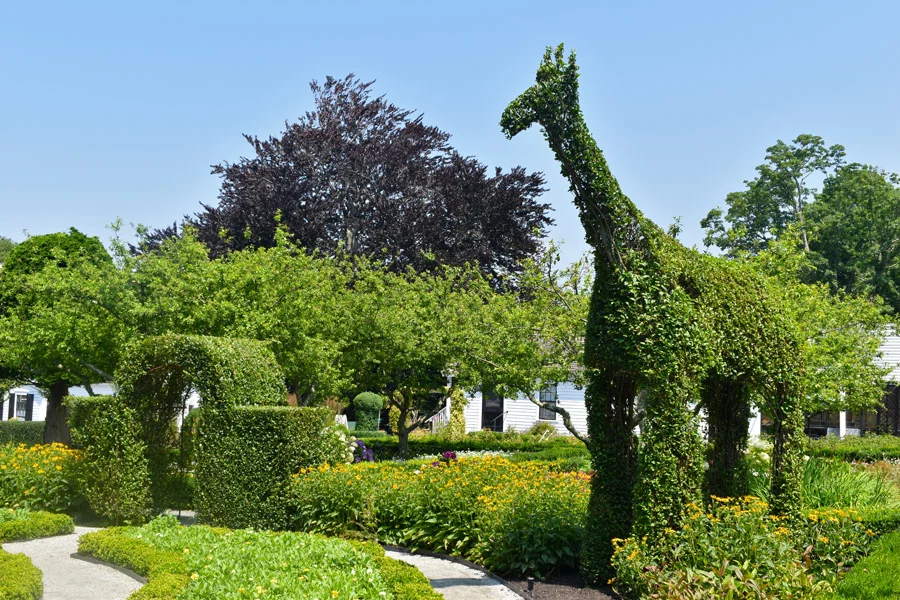
Animal and Figurative Topiary Animal shaped topiary is one of the most recognizable forms of the art. Shrubs are trained into shapes such as birds, rabbits, elephants, or even human figures. These designs are often seen in public gardens and historic estates.
Difficulty level: Advanced. Figurative shapes require long term training and very careful pruning. Plants commonly used;
Boxwood
Yew
Japanese holly (Ilex crenata)
Privet
These plants produce dense foliage that allows the shape to appear solid and well defined.
Animal topiary is often created using metal frames placed over a plant. The plant grows through the frame and is trimmed regularly to maintain the form.

Abstract Topiary Abstract topiary focuses on artistic expression rather than recognizable shapes. Plants may be shaped into flowing curves, sculptural forms, or unusual silhouettes that create visual interest.
Difficulty level: Intermediate to advanced depending on the complexity of the design. Plants commonly used;
Juniper (Juniperus spp.)
Yew
Boxwood
Cypress species
These plants allow the gardener to sculpt unusual forms while maintaining strong structure.
Abstract topiary often appears in contemporary landscape design where organic forms complement modern architecture.

Espalier Espalier is a technique where plants are trained to grow flat against a wall, fence, or trellis. Branches are carefully pruned and tied to create patterns such as horizontal tiers, fans, or candelabra shapes.
Difficulty level: Intermediate to advanced because it requires understanding plant growth patterns and consistent pruning. Plants commonly used
Apple trees (Malus domestica)
Pear trees (Pyrus communis)
Crabapple (Malus spp.)
Fig (Ficus carica)
Pyracantha

Cloud Topiary Cloud topiary, often associated with Japanese garden traditions, shapes trees into rounded clusters of foliage separated by visible trunk and branch structure. The result resembles floating clouds.
Difficulty level: Advanced because it requires long term structural pruning and careful balance. Plants commonly used
Japanese maple (Acer palmatum)
Pine species (Pinus spp.)
Juniper
Yew
Cloud pruning emphasizes the natural character of the tree rather than forcing strict geometry.

Frame Topiary Frame topiary uses metal or wire frames to guide plant growth into specific shapes. The plant grows through the frame and is trimmed regularly to maintain the outline.
Difficulty level: Beginner to intermediate because the frame provides guidance for shaping. Plants commonly used
English ivy (Hedera helix)
Boxwood
Privet
Creeping fig (Ficus pumila)
Frame topiary is often used to create animals, letters, or decorative shapes in public gardens and themed landscapes.

Knot Gardens
Knot gardens are a traditional form of topiary where low growing hedges are clipped into intricate patterns resembling woven knots. These gardens originated in medieval and Renaissance Europe.
Difficulty level: Intermediate because precise layout and consistent trimming are required.
Plants commonly used
Boxwood
Germander (Teucrium chamaedrys)
Lavender
Santolina Knot gardens are typically planted in symmetrical designs with pathways and colored gravel or flowers filling the spaces between the hedges.
Choosing the Right Topiary Style
The success of topiary depends on choosing plants that match both the design and the local climate. In colder regions such as Ontario, hardy evergreens like yew, boxwood, and arborvitae are often the most reliable choices.
For beginners, geometric shapes or frame topiary are good starting points because they are easier to maintain and allow gardeners to develop pruning skills.
More advanced forms such as cloud pruning or figurative sculpture may take several years to develop but can become striking features in the garden.
The Living Art of Gardening
One of the most fascinating aspects of topiary is that it is never truly finished. Unlike stone sculptures or metal art, living plants continue to grow and change. Maintaining a topiary requires ongoing care, patience, and attention to detail.
Gardeners must understand plant growth patterns, pruning techniques, and seasonal cycles. Over time, the plant gradually develops the desired form as new growth is trimmed and guided.
This process turns gardening into a form of living sculpture.


Comments