

Designing Your First Potager: Layouts, Plant Pairings, and Seasonal Flow
- caragardensinfo
- Nov 7, 2025
- 3 min read
Updated: Jan 3

Beginning a potager can feel both exciting and overwhelming. There are many possibilities, and the garden will eventually take on a life of its own. The key is to start with intention. A potager is not simply a place to grow food, but a space to move through, to gather from, and to feel connected with. The design should reflect how you live and how you want to interact with the garden each day.
Finding Your Layout
The structure of a potager usually begins with paths. Think first about how you move. Do you prefer straight, orderly lines that guide the eye, or soft, meandering paths that invite exploration? Neither is right or wrong. What matters is ease. A path should allow you to reach each part of the garden without stepping on the soil, since compacted soil is harder for roots to grow in.
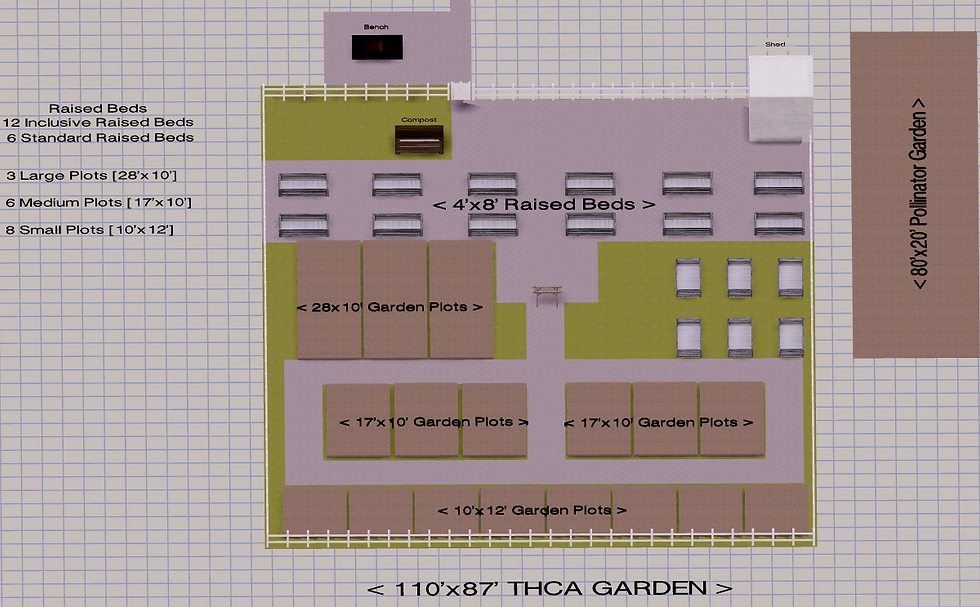
Raised beds can be helpful for both accessibility and organization. They also create a sense of definition, turning the garden into a series of rooms. But you do not need them to create a potager. Simple bordered beds made with logs, stones, or low hedges can create the same effect, while blending with the environment.
A central focal point gives the space character and cohesion. This could be a fruit tree, a trellis for climbing beans, a bird bath, or even a large rosemary or lavender shrub. When your eyes have a place to rest, the space feels whole.
Plant Pairings That Support Each Other
The beauty of a potager comes from the relationships between plants. Some protect each other, some feed each other, and some draw in the insects that make everything possible.
Tomatoes grow well with basil, not only because they complement each other in the kitchen, but because basil helps deter pests. Nasturtium forms a soft, sprawling edge that attracts aphids away from sensitive crops. Beans add nitrogen back into the soil, making them excellent companions for leafy greens. Carrots and onions support each other too. The scent of one helps mask the other from pests that search by smell.
Flowers are essential. They are not added as decoration but as nourishment for pollinators. Calendula, yarrow, echinacea, bee balm, and black-eyed Susan are reliable companions. They bring movement and color, but more importantly, they bring bees and butterflies that ensure the garden continues to fruit.
Seasonal Flow and the Rhythm of Planting
A potager shifts through the seasons. Early spring might begin with lettuces, peas, radishes, and spinach. These plants thrive in cool soil and grow quickly. As warmth settles in, tomatoes, peppers, zucchini, pole beans, and cucumbers take over. Late in the season, kale, chard, and fall lettuces carry the garden into cool weather again.
Herbs follow their own rhythms. Perennials such as thyme, sage, and chives return faithfully each year, forming the steady backbone of the garden. Annual herbs like basil and cilantro move with the heat of summer. Planting in succession ensures a continuous harvest. When one crop finishes, another can take its place. This keeps the soil active and the space lively.
Creating a Garden That Feels Like Home
A potager is personal. It reflects taste, use, and rhythm. Place your most-used herbs closest to the kitchen door. Grow vegetables you genuinely enjoy, not only those that are common. If you love fresh strawberries, let them spill along a path. If cosmos or zinnias make you smile, plant them where you will see them when you step outside each morning.
The potager grows with you. It becomes familiar and expressive. Over the years, it will tell a story of the meals you share, the seasons you observe, and the quiet moments spent tending to something alive.
To design a potager is to create a relationship with the land that surrounds you. It is to say, I will care for this, and in return, it will care for me.


Comments