

Education on Galls
- caragardensinfo
- Nov 2, 2025
- 1 min read
Updated: Jan 27
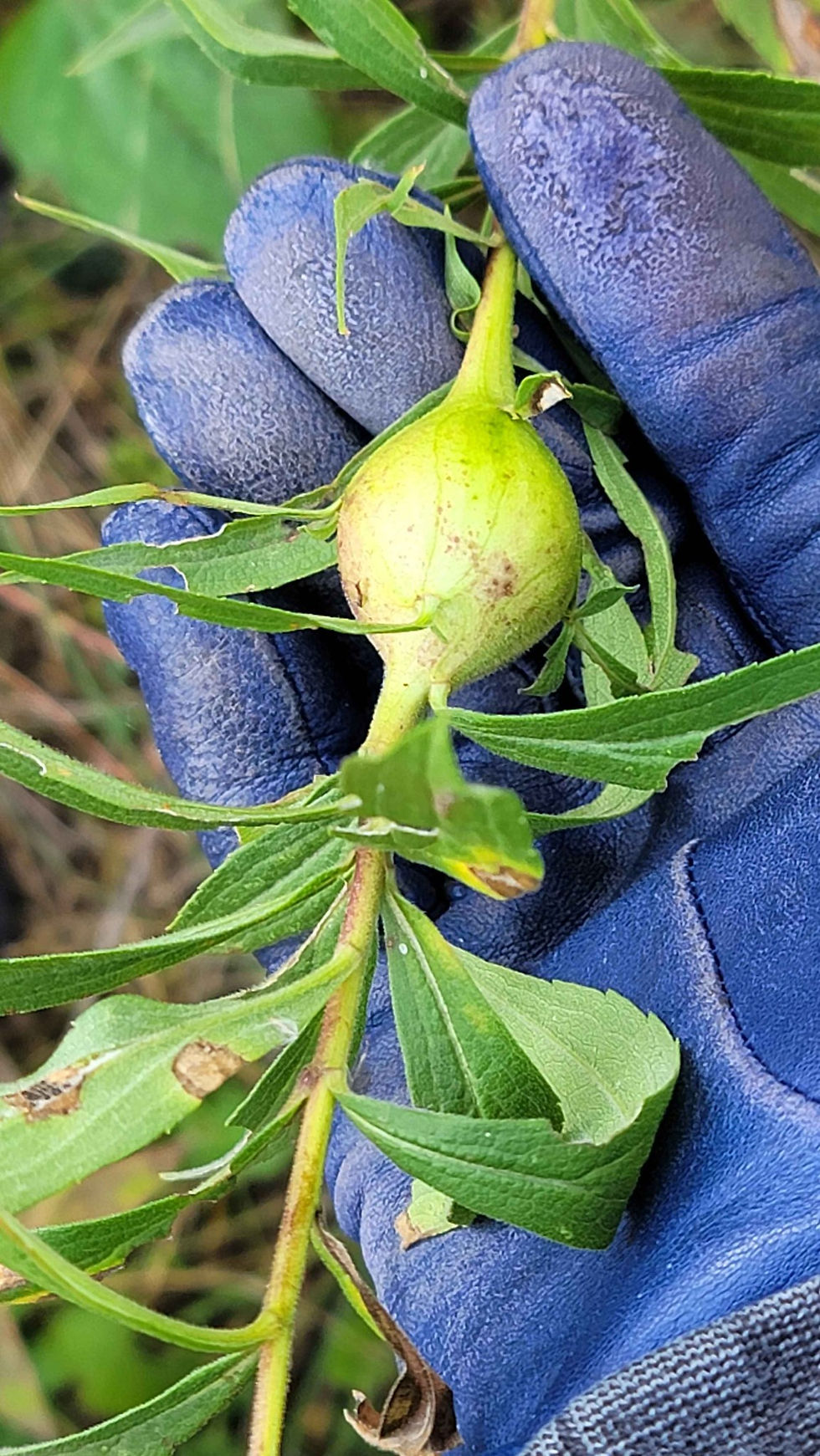
If you see a plant like this, please leave it alone!
This is called a gall. It's where a female insect lays her eggs inside the stem of a shoot, and larvae lives inside of the gall until next spring where they mature and eventually eat their way out.
In this picture is a goldenrod gall fly, moth, or midge, all native and integral to our ecosystem. Many insects are host-specific. You may find these galls on trees, flowers, shrubs, grass blades, leaf edges, or other herbaceous plants, that belong to other host-specific insects such as; wasp, aphid, beetle, and sawfly.
Galls should be left alone because they play an important role in maintaining ecological balance. Each gall provides shelter and food for native insects, birds, and other wildlife, especially during winter when resources are scarce. They also support complex food webs by hosting parasitoid wasps and other beneficial species. Since most gall-makers are native and tied to native plants, their presence signals a healthy ecosystem. Removing or destroying galls disrupts these natural relationships and can harm the biodiversity that keeps Ontario's ecosystems resilient and self-sustaining.


Comments