

Why Material Choice Matters for Canadian Fountains
- caragardensinfo
- May 9
- 13 min read
A garden fountain is constantly exposed to water, weather, and temperature change, which means the material is not just decorative. In Canada, it determines whether the fountain lasts for decades or fails after a few winters.
The main issue is that many fountain materials are designed for appearance first and climate performance second. A fountain may look heavy, stone-like, or durable in a store, but if the material is porous, thin, poorly sealed, or made with weak coatings, Canadian weather will expose those weaknesses quickly.
The best materials for outdoor fountains in Canada are dense, low-porosity, and structurally stable. They should resist water absorption, tolerate repeated freeze and thaw cycles, and allow the entire fountain system to be drained before winter. If a fountain cannot be fully emptied, dried, or protected, even a strong material becomes vulnerable.
Why Canadian Weather Damages Fountains
The most damaging force is the freeze and thaw cycle. When water enters tiny pores, seams, surface cracks, pump chambers, tubing, or decorative crevices, it expands as it freezes. That expansion creates pressure inside the material. Over time, this can cause cracking, flaking, chipping, peeling, or full structural failure.
Porous materials are at the highest risk because they absorb and hold moisture. Terracotta, low quality cast stone, soft limestone, sandstone, and some ceramics may survive warm climates but break down quickly when water freezes inside them.
Fountains also face other stresses throughout the year. Sunlight can fade coatings and make plastics or resin brittle. Hard water can leave mineral deposits that stain or weaken surfaces. Algae and organic buildup can trap moisture against the material. Seasonal temperature swings cause materials to expand and contract, which worsens small cracks over time.
The most important takeaway is simple: winter damage usually starts with trapped water. A fountain may be made from a strong material, but if water is left inside the bowl, base, pump, tubing, or hidden cavities, freezing can still destroy it.
For Canadian gardens, durability comes from two things working together: a weather-resistant material and proper winter care. One without the other is rarely enough.
Best Fountain Materials for Canada
Choosing a fountain material for Canada comes down to density, water resistance, and how well the material handles freeze and thaw cycles. The strongest materials are those that do not absorb much water, do not become brittle in cold weather, and can be fully drained before winter.
Below are some of the best long term materials for Canadian outdoor fountains.

Granite
Granite is one of the strongest choices for an outdoor fountain in Canada. It is a dense natural stone with low porosity compared to many softer stones, which means it does not absorb water as easily. This gives it a major advantage in climates where freezing and thawing happen repeatedly.
Granite works especially well for permanent fountain installations, bubbling rocks, carved basins, formal water features, and naturalistic garden designs. It is heavy, stable, and resistant to surface wear. When installed on a solid base and properly drained before winter, granite can last for decades.
Best for: long term outdoor fountains, bubbling stones, formal gardens, natural garden designs
Durability: excellent
Winter performance: excellent if fully drained
Downside: heavy, expensive, difficult to move
Granite is a strong investment material. It costs more upfront, but it is one of the least likely options to fail from normal Canadian weather exposure.
Basalt
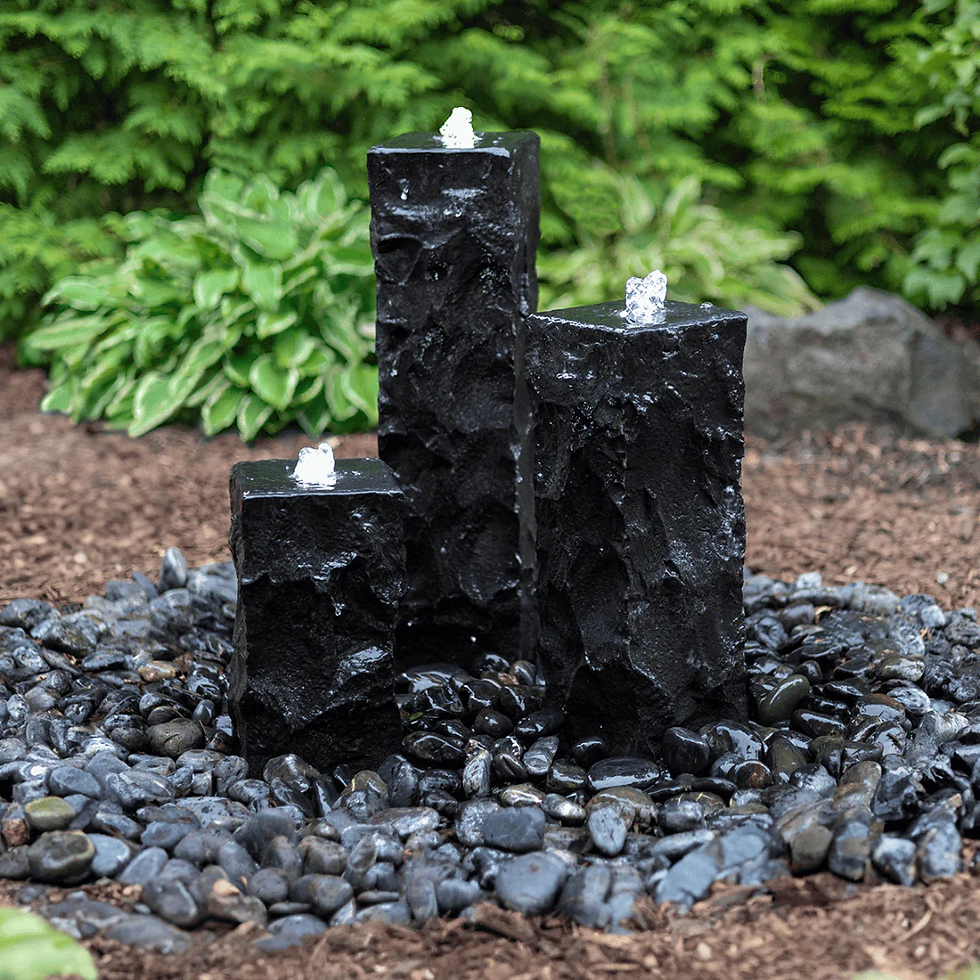
Basalt is another excellent fountain material for Canadian gardens. It is a dense volcanic stone known for its strength, dark colour, and resistance to weathering. Because it is harder and less porous than many decorative stones, it performs well outdoors when properly winterized.
Basalt is commonly used for drilled bubbling columns, natural stone water features, and modern minimalist fountains. Its dark colour gives it a clean, grounded look that works beautifully in woodland gardens, contemporary landscapes, and natural stone settings.
Best for: bubbling columns, drilled stone fountains, modern water features, naturalistic designs
Durability: excellent
Winter performance: excellent if drained
Downside: heavy, costly, limited shape options unless custom drilled
Basalt is a good choice for people who want something long lasting, subtle, and visually strong without the softer wear risks of porous stone.

Slate
Slate can be a good fountain material in Canada, but quality matters. Dense, high grade slate performs much better than thin, flaky, or decorative slate. Because slate forms in layers, poor quality pieces can split, peel, or flake when moisture gets between those layers and freezes.
Slate is best used in designs where water moves over the surface rather than sits inside cracks or seams. It works well for spillways, wall fountains, stacked stone features, and flat water movement designs. It should be installed so water drains away cleanly and does not collect between layers over winter.
Best for: wall fountains, spillways, stacked stone features, modern water designs
Durability: good to excellent depending on quality
Winter performance: good if dense and properly drained
Downside: lower quality slate can split, flake, or delaminate
If choosing slate, look for dense architectural or landscape grade stone. Avoid thin decorative slate pieces that feel brittle or crumbly at the edges.

Stainless Steel
Stainless steel can be a strong material for modern outdoor fountains because it does not absorb water, does not crack from freeze and thaw cycles, and can be shaped into clean, contemporary designs. It is especially useful for wall fountains, spillways, basins, and sculptural water features.
The main issue is grade. Not all stainless steel performs the same outdoors. Lower grade stainless can stain, rust at seams, or corrode when exposed to minerals, salts, or standing water. Higher quality stainless steel, especially 316 grade, is more corrosion resistant than 304 grade and is better suited for wet outdoor environments.
Best for: modern fountains, wall fountains, spillways, sculptural designs
Durability: very good to excellent
Winter performance: excellent if drained
Downside: can show water spots, may heat in full sun, quality varies
Stainless steel is a smart option when the fountain is well made, properly welded, and designed to drain fully. Poorly made stainless fountains can still fail at seams, joints, or low quality finishes, so construction quality matters as much as the metal itself.

Bronze
Bronze is one of the most durable materials for outdoor fountains, especially when the goal is long term use. It has been used in historic fountains for centuries because it resists corrosion better than many metals and develops a natural patina that helps protect the surface over time.
Unlike porous stone or concrete, bronze does not absorb water. This makes it far less vulnerable to freeze and thaw damage, provided the fountain is drained before winter. Its main weakness is not the cold itself, but poor maintenance, water left inside plumbing, or corrosion from harsh chemicals.
Best for: sculptural fountains, formal gardens, heritage style landscapes, long term installations
Durability: excellent
Winter performance: excellent if drained
Downside: expensive, develops patina, may attract theft risk due to metal value
Bronze is a premium material, but if longevity is the priority, it is one of the strongest choices available. It works especially well for artistic fountains where the fountain itself is meant to be a permanent feature.

Cast Stone, Only High Quality and Winter Rated
Cast stone can be beautiful, heavy, and convincing as a traditional fountain material, but it is one of the materials where quality matters the most. A well made cast stone fountain can last for years. A poorly made one can crack, chip, flake, or crumble after only a few winters.
The difference comes down to density, curing, reinforcement, sealant, and how much water the material absorbs. If cast stone is too porous, water enters the surface and expands when frozen. This is what causes cracking and surface breakdown.
Best for: formal fountains, classical garden features, traditional courtyard designs
Durability: moderate to good if high quality
Winter performance: variable
Downside: can absorb water, chip, crack, or flake
If choosing cast stone in Canada, look for clear wording such as frost resistant, freeze thaw tested, outdoor rated, or suitable for cold climates. Even with those claims, it should still be drained, dried, covered, and protected from direct winter moisture.

High Quality Concrete, Properly Sealed
Concrete can work well for Canadian fountains, but only when it is dense, properly cured, reinforced, and sealed. Concrete is naturally porous, which means it can absorb water if left untreated or poorly maintained.
Heavy, well made concrete fountains are much more durable than thin decorative ones. The thicker and denser the piece, the better it can resist weather stress. However, no concrete fountain should be left holding water through winter. If water freezes inside the bowl, base, tubing, or cracks, damage can still occur.
Best for: large permanent fountains, custom builds, heavy landscape features
Durability: moderate to excellent depending on quality
Winter performance: good if sealed and drained
Downside: porous, heavy, may crack if water freezes inside
Concrete should be resealed periodically, especially if the surface begins absorbing water rather than shedding it. It is a strong option, but it is not maintenance free.
Fiberglass Reinforced Concrete
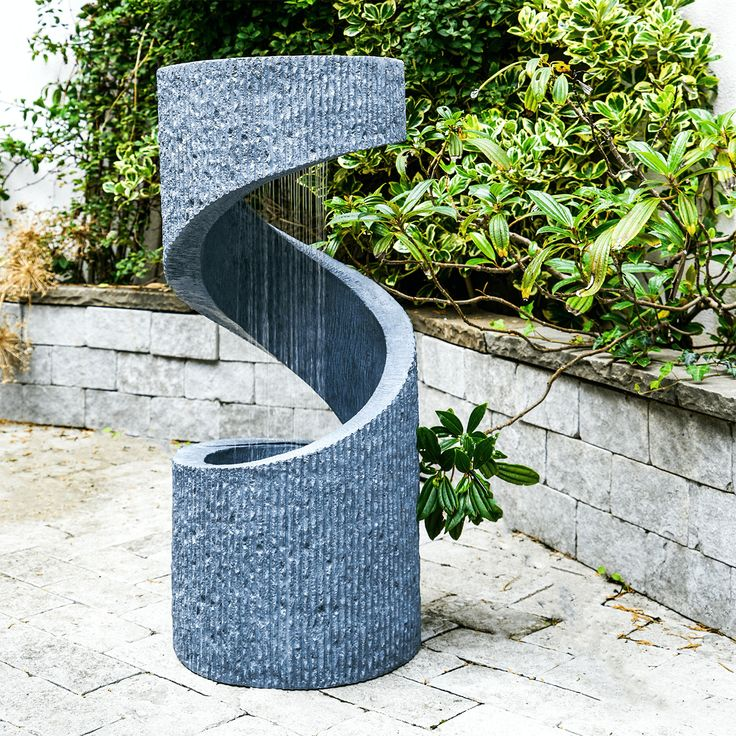
Fiberglass reinforced concrete, often called GFRC, is a lighter alternative to standard concrete. It uses glass fibers within the concrete mix to improve strength and reduce weight. This makes it easier to move and install while still giving the appearance of stone or concrete.
GFRC can perform well in Canada when it is well made, properly sealed, and winterized. Because it is lighter, it may be more practical for decorative fountains that need to be moved or stored. However, the quality of the outer coating matters. Poor coatings can wear, crack, peel, or delaminate over time.
Best for: larger decorative fountains with reduced weight, patios, semi permanent garden features
Durability: good to very good
Winter performance: good if drained and covered
Downside: quality varies, surface coatings can wear
GFRC is a practical middle ground between heavy stone and fragile lightweight materials. It is best for people who want a substantial looking fountain without the full weight of solid concrete or stone.
Resin, Only as a Short Term or Seasonal Option
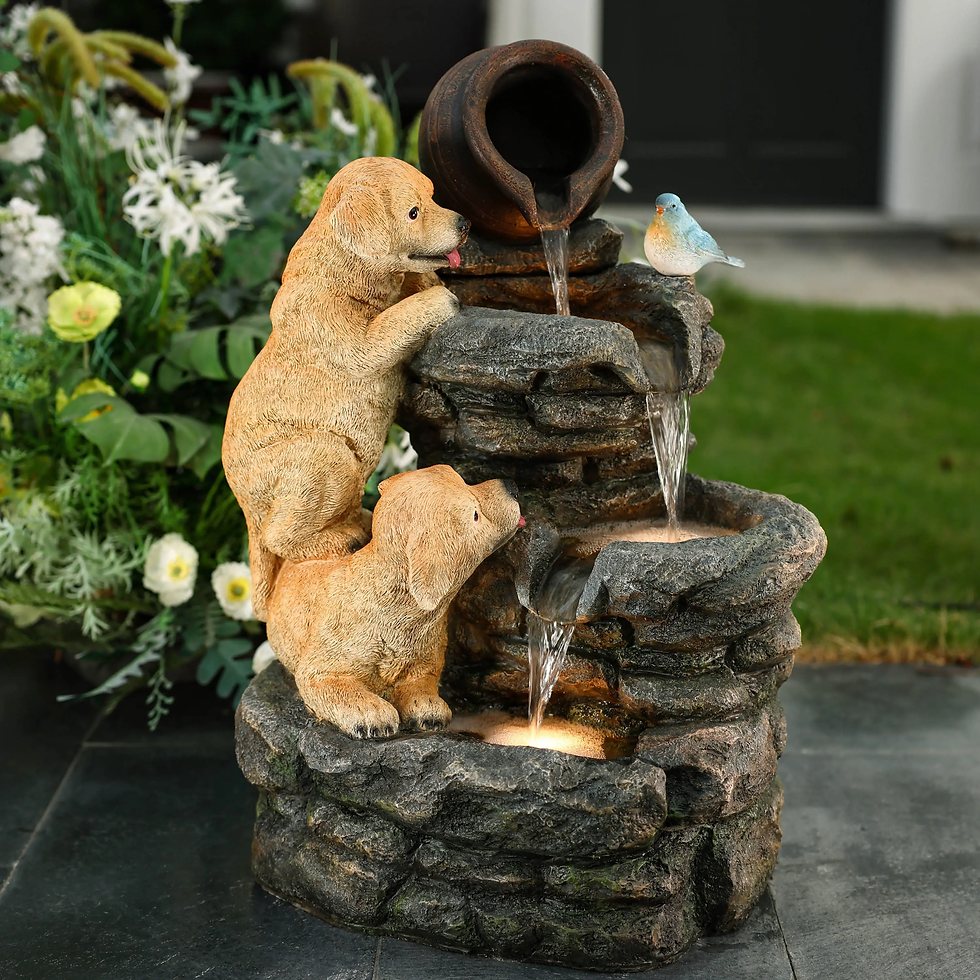
Resin fountains are popular because they are affordable, lightweight, and easy to move. They are often molded to imitate stone, ceramic, concrete, or metal. For a seasonal garden feature, resin can be convenient.
The problem is longevity. Resin does not age well under Canadian conditions. UV exposure can fade the surface and make the material brittle. Cold temperatures can increase cracking risk, especially if water remains inside the fountain. Faux stone coatings or paint layers may also peel after repeated exposure to sun, moisture, and frost.
Best for: temporary fountains, budget fountains, seasonal patio decor
Durability: low to moderate
Winter performance: poor if left outside
Downside: cracks, fades, becomes brittle, coating may peel
If using resin in Canada, treat it as seasonal. Drain it fully, clean it, dry it, and store it indoors before freezing temperatures arrive. It should not be considered a permanent outdoor material unless you are comfortable replacing it every few seasons.
Materials to Avoid for Long Term Outdoor Fountains in Canada
Some fountain materials are beautiful at first but poorly suited to Canadian freeze and thaw conditions. The problem is usually not that the material is weak in every climate. The problem is that it absorbs moisture, traps water, or relies on coatings that cannot handle repeated winter stress.
These materials may still work as seasonal decor, but they should not be treated as permanent outdoor fountain materials in Canada.
Terracotta
Terracotta has a warm, natural look that fits beautifully into gardens, patios, and Mediterranean style spaces. Unfortunately, it is highly porous, which makes it risky for outdoor fountains in Canada.
Because terracotta absorbs water easily, moisture can move into the clay body and remain there. Once temperatures drop below freezing, that trapped water expands. Over time, this causes cracks, flaking, surface crumbling, or complete breakage.
Avoid for: permanent outdoor fountains
Main issue: absorbs water and cracks during freeze and thaw cycles
Best use: seasonal fountain or decorative piece stored indoors before frost
Terracotta can still be used outdoors during the warm season, but it should be drained, dried, and brought inside before freezing weather arrives. Leaving it outdoors year round is usually not worth the risk.
Low Fired Ceramic
Low fired ceramic behaves similarly to terracotta because it remains relatively porous after firing. It may look sealed or finished, especially if glazed, but that does not always mean it is frost safe.
Glaze can reduce water absorption on the surface, but it does not guarantee protection. Water can still enter through tiny cracks, unglazed bottoms, seams, drainage holes, chips, or exposed edges. Once moisture gets under the glaze and freezes, the glaze can lift, flake, or crack away from the body of the ceramic.
Avoid for: winter exposure and year round outdoor fountains
Main issue: cracking, glaze flaking, and water absorption
Best use: summer only decor, indoor fountains, or protected seasonal use
Only high fired, frost resistant ceramic should even be considered for outdoor use in Canada, and even then it should be properly drained and stored or protected during winter.
Cheap Cast Stone
Cheap cast stone is one of the most misleading fountain materials because it often looks heavy, permanent, and durable when new. The issue is that not all cast stone is made to the same standard.
Low quality cast stone may be too porous, poorly cured, weakly reinforced, or covered with a thin surface coating that breaks down over time. Once moisture enters the material, freezing can cause the surface to chip, flake, split, or crumble.
Avoid if: it feels unusually lightweight, chalky, sandy, poorly sealed, or does not clearly state frost resistance
Main issue: water absorption, cracking, surface flaking, and structural weakness
Best use: short term outdoor decor only if winterized carefully
A cast stone fountain should specifically say it is outdoor rated, frost resistant, or freeze thaw tested. Without that, it should be treated with caution.
Plaster or Gypsum Based Fountains
Plaster and gypsum based fountains should be avoided for outdoor water features in Canada. These materials are not designed to handle constant moisture, freezing temperatures, or long term weather exposure.
Plaster and gypsum can absorb water, soften, dissolve, crumble, or lose structural strength when exposed to rain and fountain water. Once freezing temperatures arrive, any trapped moisture makes the breakdown happen even faster.
Avoid for: any outdoor fountain or water feature
Main issue: softens, dissolves, crumbles, and fails with moisture
Best use: indoor decorative fountains only
These materials may work for indoor decor, but they are not suitable for outdoor garden fountains in a Canadian climate.
Thin Plastic
Thin plastic fountains are common because they are lightweight, inexpensive, and easy to move. However, they are usually not built for long term outdoor durability.
Plastic can become brittle from UV exposure, especially after repeated sun and temperature stress. In cold weather, thin plastic is more likely to crack, warp, or split, particularly if water remains inside the structure. Over time, colour fading and surface breakdown are also common.
Avoid for: long term outdoor use
Main issue: cracking, warping, fading, brittleness, and UV damage
Best use: short term seasonal decor
Thin plastic may be fine for a temporary fountain or a budget piece, but it should not be viewed as a permanent garden investment. If used outdoors, it should be drained and stored indoors before winter.
Untreated Wood
Wood can be used in water features, but only when it is properly designed, lined, sealed, or built from durable species. Plain untreated wood should not be used as the main water holding structure because constant moisture leads to decay.
In a fountain, untreated wood is exposed to water, algae, bacteria, temperature changes, and freeze thaw stress. Over time, this can cause swelling, splitting, rot, leakage, and structural failure.
Avoid unless: it is properly lined, sealed, or designed as a water feature
Main issue: rot, splitting, leakage, and biological breakdown
Best use: lined barrels, protected decorative surrounds, or properly sealed features
Cedar, redwood, and oak barrels can work if they are correctly lined and maintained, but untreated wood alone is not reliable for holding water long term in Canada.
Soft Limestone and Sandstone
Limestone and sandstone can be visually beautiful, but many types are too porous for long term fountain use in Canadian winters. These stones can absorb water into their surface and internal pores. When that moisture freezes, the stone can flake, crack, erode, or shed layers over time.
They are especially risky when used as bowls, basins, or surfaces where water sits rather than quickly drains away.
Avoid for: basins, bowls, and fountain parts that hold water through winter
Main issue: water absorption, erosion, cracking, and surface breakdown
Best use: decorative dry stone features or protected seasonal use
Dense limestone or high quality sandstone may perform better than soft, porous types, but they still require caution. For permanent Canadian fountains, granite and basalt are much safer long term choices.
Winterizing Matters More Than People Realize
Even the strongest fountain material can fail if water freezes inside it. Winter damage is not always caused by the outside surface. It often starts in hidden places such as tubing, pump chambers, seams, basins, carved details, or small internal cavities where water collects and cannot escape.
Before winter, always unplug the fountain and remove the pump. Pumps should be cleaned, dried, and stored indoors because ice can crack the casing, damage seals, or ruin the motor. Once the pump is removed, drain every part of the fountain, including bowls, basins, reservoirs, tubing, and any decorative areas where water may sit.
After draining, clean out algae, leaves, sediment, and mineral buildup. Organic debris holds moisture against the surface, and mineral deposits can trap water in textured areas. Once cleaned, the fountain should be allowed to dry fully before it is covered.
A breathable waterproof cover is usually the best choice. The goal is to keep rain, snow, and ice out while still allowing trapped moisture to escape. Wrapping a fountain tightly in plastic can create condensation, especially during temperature swings. That trapped moisture can settle back into the material and increase freeze damage instead of preventing it.
Small fountains should be lifted off the ground if possible, especially if they sit on soil, gravel, or patio stones where moisture collects. Raising them slightly improves airflow and reduces contact with freeze thaw moisture from below. Lightweight materials such as resin, thin plastic, low fired ceramic, and small composite fountains should be stored indoors whenever possible.
Winterizing is not optional in Canada. It is part of owning an outdoor fountain. A durable material gives you a better starting point, but proper winter care is what protects that investment year after year.
What to Choose If You Want It to Last 20 Years or More
If the goal is a fountain that can last 20 years or more in Canada, choose materials that are dense, stable, and resistant to water absorption. The best long term choices are granite, basalt, bronze, high quality stainless steel, dense slate, and properly made reinforced concrete.
Granite and basalt are excellent for permanent stone fountains because they are hard, dense, and highly weather resistant. Bronze and stainless steel are strong choices for sculptural or modern fountains because they do not absorb water and can handle freeze thaw exposure when drained. Dense slate can work well in spillways and wall features if it is high quality and installed so water does not sit between layers. Reinforced concrete can last a long time, but only if it is properly cured, sealed, drained, and maintained.
For the longest lifespan, material choice should be combined with good design. A fountain built for Canadian weather should have reliable drainage, a stable base, accessible pump components, and no hidden areas where water can remain trapped through winter.

Comments